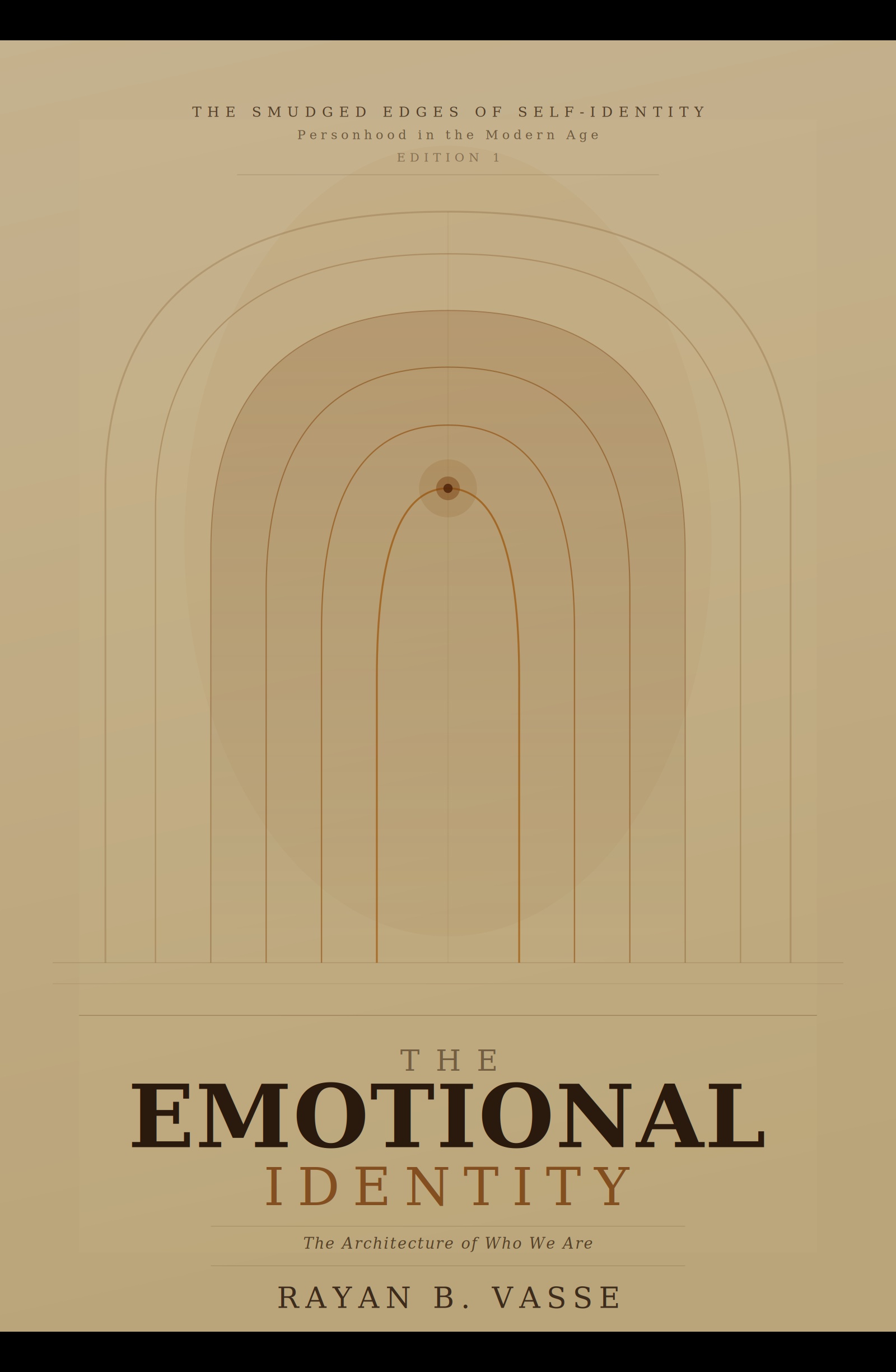
Emotional Identity
The Architecture of Who We Are in an Age of Fluid Selves and Artificial Companions
One-line role Maps the emotional structures and hidden forces that quietly shape how we become who we are.
What the book does
Most people talk about identity as if it were a label, a category, or a story. Emotional Identity asks a deeper question: what if identity is not something we simply declare, but something built from emotional architecture, recognition, belonging, memory, ritual, power, and the worlds we move through? This book brings together history, neuroscience, psychology, migration, culture, technology, and lived experience to show how identity is formed, destabilized, and remade in the modern age.
This is a core conceptual volume of the Smudged Edges of Self series: a wider lens on the foundations beneath identity themes across solitude, persona, culture, belonging, and reflection. It moves from ritual, nation, money, and collective emotion to migration, desire, trauma, digital masks, and AI companionship — asking not only who we are, but what emotional scaffolding holds us together at all.
While this volume stands fully on its own, it also serves as the conceptual backbone of the broader Living Literature project. Readers who want to go beyond theory into reflective dialogue, guided self-inquiry, and the evolving architecture of personhood can continue that journey through the wider Smudged Edges of Self series and the Living Literature platform under development.
The work beneath the book
Six structures the book maps
Belonging
Belonging is one of the main emotional conditions under which selfhood becomes livable.
Recognition
Recognition helps inner life stay coherent across interpersonal, cultural, and digital contexts.
Regulation
Emotional regulation is not separate from selfhood; it is one of its core supports.
Symbol & Ritual
Rituals, institutions, and symbolic forms scaffold identity continuity across time.
Multiplicity & Fracture
The key question is not whether multiplicity exists, but how it is held without collapse.
AI & Future Selfhood
AI now participates in reflective life and begins to shape emotional architecture directly.
Where the thinking comes from
This book is not a textbook, but these works help map the broader conceptual terrain. The frameworks in this volume are not invented from scratch — they are built on the work of the following researchers, simplified and made interactive for readers who deserve the same self-understanding as any psychology graduate, without needing to read the primary literature themselves.
- William James — The Principles of Psychology
- George Herbert Mead — Mind, Self, and Society
- Erik H. Erikson — Identity: Youth and Crisis
- Antonio Damasio — Self Comes to Mind
- Dan P. McAdams — selected work on narrative identity
- John Bowlby — selected work on attachment
If Emotional Identity asks what holds the self together, the surrounding books and systems ask how that structure shifts across solitude, role, culture, belonging, and long-form dialogue.